Iridium vs Platinum vs Copper Spark Plugs: Differences
Posted by DIYCar Editorial Team Reviewed by DIYCar Editorial Team Review date Posted Topic: Spark plugs
Standard spark plugs use nickel-alloy electrodes with a copper core, platinum plugs are more durable than standard nickel, and iridium plugs are harder still. NGK says iridium is six times harder and eight times stronger than platinum. Your owner's manual names the plug your engine needs, so use that specified plug rather than choosing by material alone.
Section of: How to Change Spark Plugs: A Beginner's Step-by-Step Guide
Spark plug material changes how long a plug lasts, not whether it is the right plug. This page explains what each material is, from a plug maker’s own description, and why you should use the plug your manual specifies. For the job itself, see the spark plug replacement guide.
What each material is and does
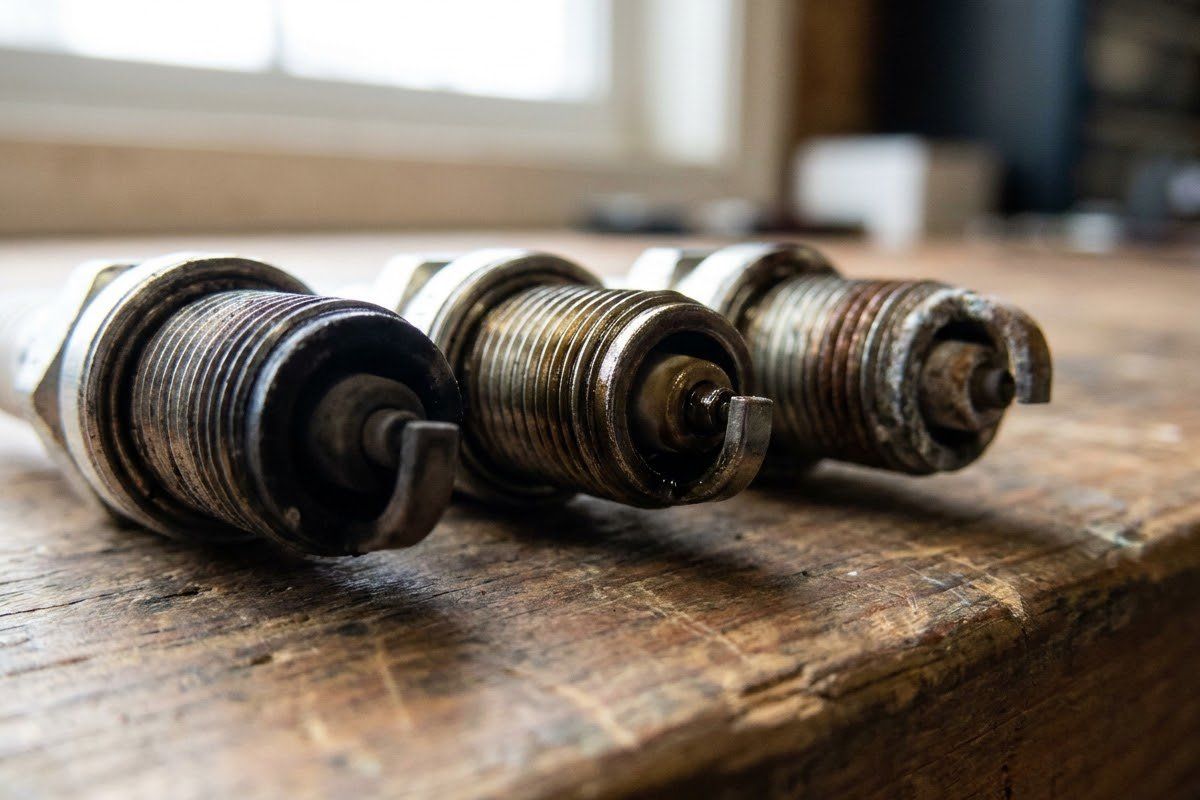
NGK describes standard plugs as having a nickel-alloy outer center electrode and a nickel ground electrode. Copper appears in the inner part of the center electrode because it is soft and has low resistance, which makes it unsuitable for the outer electrodes. Platinum is more durable than standard nickel and costs less than iridium. Iridium is harder still: NGK says it is six times harder and eight times stronger than platinum, with a melting point 698 degrees C higher. Some plugs combine an iridium center electrode with a platinum ground electrode.
Lifespan and the cost trade-off
NGK says nickel plugs need replacing earlier than precious-metal plugs. NGK says platinum costs less than iridium; this page gives no prices because we have no dated primary source for them. How often to change them is set by your manual; see the replacement interval.
Use what the manual specifies
Your engine was designed around a particular plug. The manual names it. Choosing a different material may not fit the same specification, so match the part number or the maker’s fitment listing, not the material alone. If your manual lists more than one acceptable plug, pick from that list.
No brand rankings
This site does not rank plug brands. The manual or the plug maker’s fitment data tells you what fits. Any comparison page that names a “best” plug without telling you to check your engine’s specification is skipping the step that matters.
Heat range and gap in one paragraph
Heat range and gap are plug specifications to take from your manual or the plug maker’s fitment information, not from this page. NGK lists an incorrect gap among the causes of plug failure, so measure it before installing. Check bad spark plug symptoms if you are choosing plugs because the engine is running badly, and read the safety basics page before any hands-on work.
Which should you choose?
- Your manual specifies copper or nickel: fit that plug and change it at the manual’s interval.
- Your manual specifies platinum or iridium: fit that plug; do not downgrade to a cheaper material.
- You want to change material: only if the plug maker lists the new plug as correct for your engine.
| Feature | Copper / nickel alloy | Platinum | Iridium |
|---|---|---|---|
| Electrode material | Copper core with nickel-alloy electrodes | Platinum tip | Iridium tip |
| Durability | Replaced earlier than precious-metal plugs | More durable than standard nickel | Six times harder, eight times stronger than platinum (NGK) |
| Cost | Not compared by NGK; no prices here | Less than iridium | More than platinum; no prices here |
| Choose when | Your manual specifies it | Your manual specifies it | Your manual specifies it |
Use the plug your owner's manual specifies. Material is a durability trade-off, not an upgrade path, and this page does not rank brands.
Quick answers
Can I upgrade copper plugs to iridium?
Only if the plug maker lists an iridium plug as a correct fit for your engine and your manual does not forbid it. Material is not the only specification, so look up your engine's fitment rather than assuming an iridium plug is a drop-in swap.
Do iridium plugs improve power?
We found no official source that states a power gain from changing plug material, so this page makes no such claim. NGK's description focuses on hardness and durability. Fit the plug your manual specifies and keep the gap correct. If a car has lost power, a diagnosis is better value than a new set of plugs.
Are copper plugs bad?
No. NGK describes standard plugs as nickel-alloy with a copper core, and notes only that nickel plugs need replacing earlier than precious-metal ones. If your manual specifies a nickel or copper-core plug, that is the correct part. Follow the maker's replacement interval rather than switching materials to save a job.
What is heat range?
Heat range is one of the plug specifications; we give no definition or values here. Your owner's manual or the plug maker's fitment information gives the right plug for your engine, so do not pick a different heat range unless the maker says to.
Do I still need to check the gap on iridium plugs?
Yes. NGK lists an incorrect gap as a cause of plug failure. Check the gap against the figure in your manual or the plug maker's information before installing, using the right gauge, and follow the plug maker's instructions before adjusting it.
Is a more expensive plug always better?
No. The right plug is the one your engine's maker specifies. NGK says precious-metal plugs need replacing later than nickel plugs, but price and material do not tell you whether a plug is correct for your engine. Compare the part number with your manual before you buy.
Where we got this
- NGK Spark Plug: You asked, NGK answers (spark plugs) (ngkntk.com)
Further guides
- How to Change Spark Plugs: A Beginner's Step-by-Step Guide
How to change spark plugs on a gasoline car: check the manual first, work one cylinder at a time, torque to spec, and know when to stop and call a shop.
- Bad Spark Plug Symptoms: Misfires, Hard Starts and More
Bad spark plug symptoms include rough idle, misfires, hard starting and poor fuel economy. See what else causes them and when to stop driving.
- How Often to Change Spark Plugs (by Plug Type)
How often to change spark plugs: the answer is your owner's manual interval. See how plug material affects wear, the signs of late plugs and what to check.