Engine Coolant (Antifreeze) Guide: Types, Colors, Safety
Posted by DIYCar Editorial Team Reviewed by DIYCar Editorial Team Review date Posted Topic: Coolant
Engine coolant, commonly called antifreeze, is mixed with water, and the type and mix ratio are set by your owner's manual. One automaker's manual says an ethylene-glycol coolant protects the engine against corrosion and freezing. Never open a hot radiator cap, because hot coolant and steam can blow out under pressure. Ethylene glycol is poisonous, so keep it away from children.
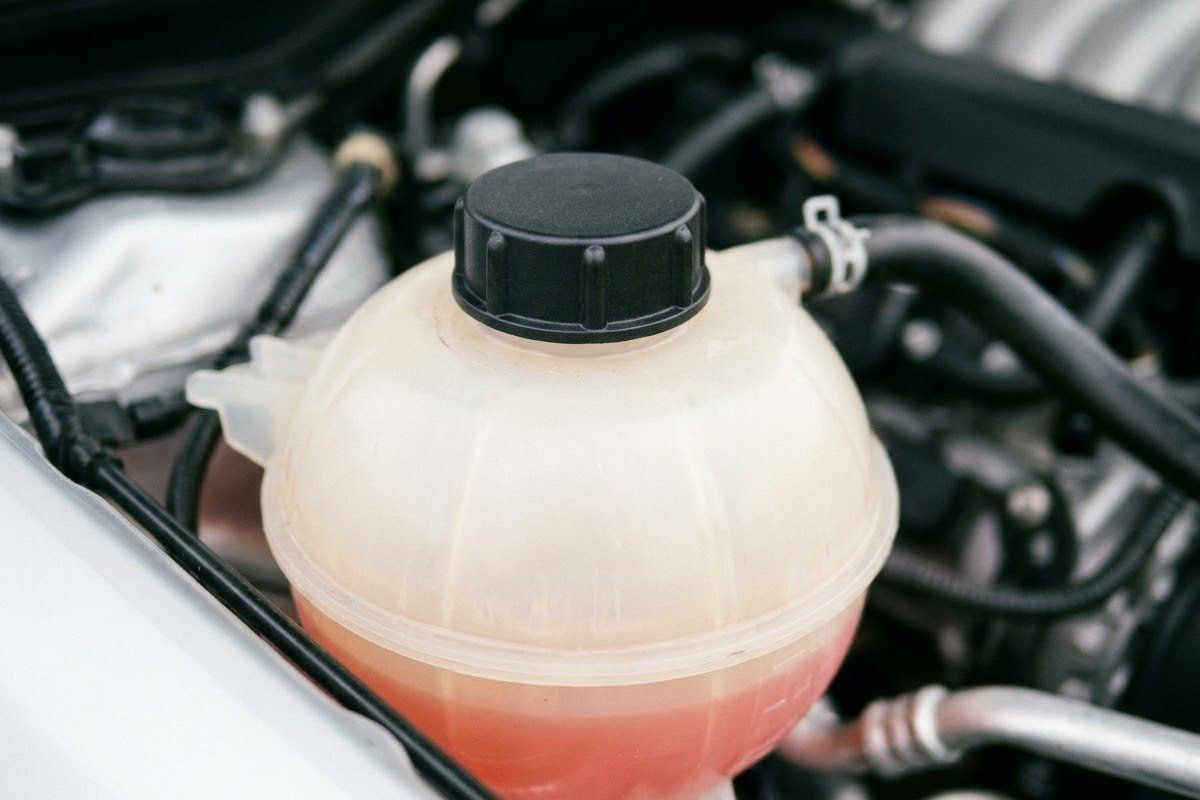
Engine coolant helps protect your engine, and it is also a poison that can scald if it is hot. This guide covers what it does, how to choose the right one and how to handle it. For specific jobs and questions, see how to flush coolant, coolant types and colors and is coolant the same as antifreeze.
What coolant does
Coolant protects the engine from freezing and corrosion. One automaker’s owner’s manual says its engine, which has aluminum parts, must be protected by a phosphate-based ethylene-glycol coolant to prevent corrosion and freezing. Your manual names the coolant your engine needs.
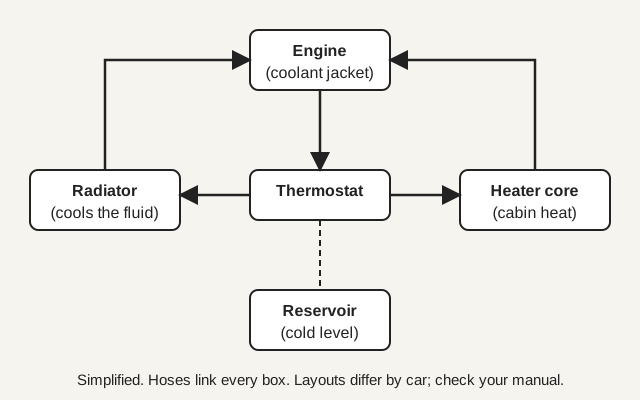
Coolant versus antifreeze
The two words mostly describe the same fluid. Owner’s manuals use both words for the fluid, and the mix with water is set by the manual. The same automaker’s manual says not to use a solution of more than 60% or less than 35% antifreeze. Many people use antifreeze for the concentrate and coolant for the mixed fluid in the car. Our page is coolant the same as antifreeze covers it in detail.
Types and what color does and does not tell you
Coolants are sold under many specification names. The automaker’s manual quoted above names its requirement by chemistry (a phosphate-based ethylene-glycol coolant), not by color. Match the specification in your own manual, and do not choose a coolant by color. See coolant types and colors.
Use the type in the manual
Your owner’s manual names the coolant specification your car needs. Buy a product that states that specification on the label. Do not mix coolants unless the manual or label says it is compatible; the automaker’s manual above warns against mixing alcohol or methanol coolants with the specified coolant. Consult your owner’s manual first.
Level checks and hot-system safety
Never open a radiator or pressure cap on a hot engine. One automaker’s owner’s manual says never to remove the radiator cap while the engine is operating or hot, and that scalding coolant and steam may blow out under pressure and cause serious injury. It says even with the engine off, do not remove the cap or drain plug while the engine and radiator are hot. Check the level only when the engine is cool, between the reservoir’s MIN and MAX marks, as that manual describes. If the level keeps dropping, the system has a leak and needs a shop.
Toxicity, disposal and pets
Ethylene glycol is poisonous. ATSDR says it is odorless but has a sweet taste, that antifreeze is a sweet-tasting, brightly colored liquid so accidental ingestion can occur, and that swallowing larger amounts can cause serious illness or death. ATSDR says to keep antifreeze out of the reach of children, not to leave open bottles near the ground, and to seek medical attention as soon as possible if ingestion is known or suspected. Keep pets away from spills too.
- Wipe spills at once and keep pets away.
- Wash skin and clothing after contact.
- Store used coolant in a sealed, labeled container.
- Treat it as household hazardous waste: EPA lists antifreeze among its examples, says these products require special care, and says to check with your local waste management agency.
When to flush
Flush on the schedule your owner’s manual gives, or when a technician advises it. Our step-by-step guide is how to flush coolant. It is a job for a cool engine, a drain pan and careful disposal.
When a leak needs a shop
Use a shop if you see puddles under the car, repeated low coolant or an overheating warning. Do not keep driving a car that is overheating. Stop safely and let it cool before checking anything. For general job safety, see the safety rules for home car work. This guide is for gasoline passenger cars; diesel differs, so see your manual.
All Coolant guides
- Coolant Types and Colors: OAT, HOAT, IAT and Why Color Misleads
Coolant types and colors explained: IAT, OAT and HOAT labels, why not to choose by dye color, matching your manual's specification and why not to mix.
- How to Flush a Car's Coolant: Step by Step
How to flush car coolant safely: follow the manual interval, work on a cool engine, drain, flush and refill, handle disposal and know when to use a shop.
- Is Coolant the Same as Antifreeze?
Is coolant the same as antifreeze? Mostly yes: antifreeze is often the concentrate, coolant the mixed fluid in your car. Mix, safety, disposal.
Quick answers
Can I use water instead of coolant?
Not as a substitute. One automaker's manual says to use a solution of between 35% and 60% antifreeze, and warns that the mixture may freeze in extremely low temperatures when antifreeze concentration is below 45%. It also says to use only deionized or soft water in the system. Follow your own owner's manual and have a leak checked if the level keeps dropping.
Is coolant toxic?
Yes. Coolant is based on ethylene glycol, which ATSDR says is odorless with a sweet taste. ATSDR notes antifreeze is a sweet-tasting, brightly colored liquid, so accidental ingestion can occur, and swallowing larger amounts can cause serious illness or death. It says to keep antifreeze out of reach of children and to seek medical attention as soon as possible after known or suspected ingestion.
How often should coolant be changed?
Follow your owner's manual; it gives the interval for your car. We do not give a universal number because intervals differ by vehicle and coolant type. One automaker's manual separately says to check the antifreeze protection and coolant level at least once a year. If you do not have the manual, a shop can look up the interval for your exact vehicle.
What is a coolant flush, and do I need one?
A flush drains the old coolant and cleans the system before refilling. You need one when your manual's interval says so, or when a technician finds the coolant in poor condition. Our flush guide covers the steps and when to hand the job to a shop. Never open the cap or a drain on a hot engine.
Can I mix different coolants?
Only if your owner's manual or the coolant label says they are compatible. Coolants are sold under many specification names, and color alone does not tell you what is in the bottle. Use the type the manual specifies and see our page on types and colors.
Where do I dispose of old coolant?
Treat it as household hazardous waste. EPA lists antifreeze among household hazardous waste examples that require special care, and suggests looking for special collection events or permanent collection centers in your community; check with your local waste management agency first. Store old coolant in a sealed, labeled container away from children, and do not pour it down a drain or onto the ground.
Where we got this
- Kia owner's manual: Engine coolant (ownersmanual.kia.com)
- Kia owner's manual: Removing the radiator cap and checking the coolant level (ownersmanual.kia.com)
- ATSDR: Ethylene Glycol ToxFAQs (atsdr.cdc.gov)
- EPA: How Do I Recycle Common Recyclables (epa.gov)
Further guides
- Coolant Types and Colors: OAT, HOAT, IAT and Why Color Misleads
Coolant types and colors explained: IAT, OAT and HOAT labels, why not to choose by dye color, matching your manual's specification and why not to mix.
- How to Flush a Car's Coolant: Step by Step
How to flush car coolant safely: follow the manual interval, work on a cool engine, drain, flush and refill, handle disposal and know when to use a shop.
- Is Coolant the Same as Antifreeze?
Is coolant the same as antifreeze? Mostly yes: antifreeze is often the concentrate, coolant the mixed fluid in your car. Mix, safety, disposal.