Brake Pads Explained: Types, Wear Signs and When to Replace
Posted by DIYCar Editorial Team Reviewed by DIYCar Editorial Team Review date Posted Topic: Tires and brakes
Brake pads are the friction material that clamps against the rotor to slow the car. Warning signs include a squeal from a wear indicator, grinding that Wagner says typically means the pads are worn through, a pad under about a quarter inch, and pedal vibration. If the pedal is soft, the car pulls or you hear grinding, stop driving and call a shop or tow.
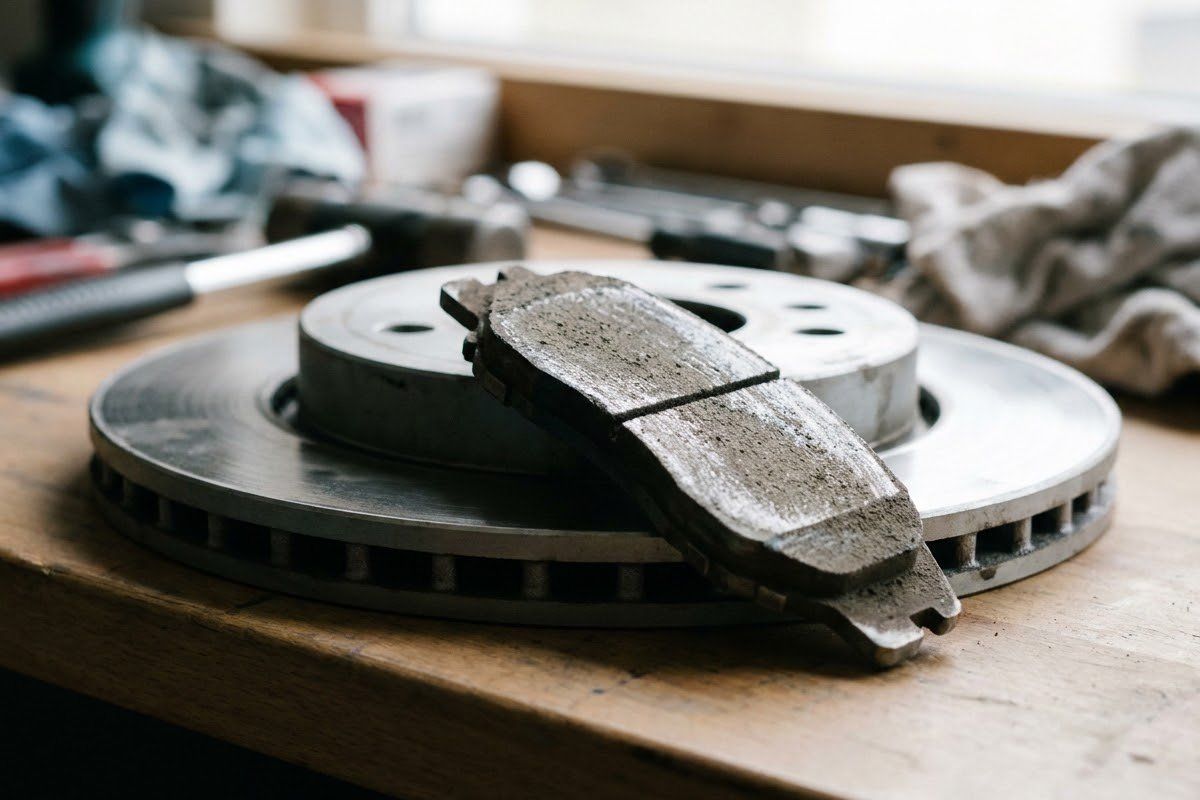
Brake pads are the part of your brakes that wears out on purpose. This guide covers what they do, the signs they are wearing, the main pad types and when to hand the job to a shop. Brakes are the highest-risk system a beginner can touch, so the job itself has its own page: how to replace brake pads. To measure wear, see how thick the pad should be.
What brake pads do
In a disc brake, pads sit on either side of a rotor that turns with the wheel. When you press the pedal, the caliper squeezes the pads against the rotor and friction slows the car. Because the pad material is designed to wear away, it must be replaced. Wagner notes you can see the pad, caliper, rotor and brake lines with the wheel off.
Wear signs
- Squeal. Some vehicles have wear indicators that squeal to warn that pads need changing, per Wagner.
- Grinding or growling. Wagner says this typically means pads have worn through.
- Thin pads. A pad that looks thinner than about 1/4 inch may be due for replacement, and a wear-indicator slot that is gone or barely visible means new pads are due. See measuring pad wear.
- Pedal or steering wheel vibration. Wagner lists this as a sign of worn pads.
- Warning light. Some vehicles trigger a dashboard warning when pads reach a minimum level.
Wagner also notes that noticeably cleaner wheels (less brake dust than before) can be a sign the pads are worn; it is not a measurement, so check the pads themselves.
Types: ceramic, semi-metallic and organic
An Advics article describes the two common types. Semi-metallic pads contain 30 to 70 percent metals and are chosen for performance driving, towing or track use. Ceramic pads are quieter, make a finer dust and typically last longer. Organic pads are a third type; the sources we opened do not cover them, so we make no claim about them. The vehicle maker’s specification decides which pad fits your car, and not every vehicle is compatible with ceramic pads.
Pads, rotors and calipers work together
Wagner says rotors should be inspected for lateral run-out, parallelism and minimum thickness specification, and replaced if they are outside it. Wagner also says to make sure guide pins are not binding or corroded, so the caliper releases fully instead of dragging on the rotor, and that noise generally results from rust. That is why a brake inspection looks at the whole assembly, not only the pads.
DIY or shop: brakes are safety-critical
If you have the manual’s procedure, a torque wrench, jack stands, a safe place to work and a way to test the result at low speed, a pad change is possible. If any of those is missing, use a shop. Electric parking brakes and brake-by-wire systems are shop jobs. Read DIY car safety first, and see how to jack up a car safely. While wheels are off for rotation, look at the pads too; see rotation intervals.
What to ask a shop
- Which pads are being fitted, and are they the type my manual specifies?
- What is the measured pad thickness and the rotor condition, as numbers?
- Are the rotors being replaced or resurfaced, and why?
- Are the caliper slides and hardware being serviced?
- Is the brake fluid condition being checked? Wagner says very dark fluid may need replacing.
Never drive with grinding or a soft pedal
Stop driving and call a tow or a shop if you hear grinding, the pedal feels soft or sinks, the car pulls to one side when braking, you smell burning or see fluid leaking. Do not continue to see if it clears.
| Feature | Ceramic | Semi-metallic |
|---|---|---|
| Made of | Ceramic compound, often fortified with other material | 30 to 70 percent metals such as copper, iron and steel or other composites |
| Noise | Quiet | Can be noisier |
| Dust | Finer dust, less debris on wheels | More dust than ceramic |
| Wear | Typically last longer; less damage to rotors | Not described as longer-lasting |
| Heat | Handle high temperatures with quick recovery | Material conducts heat well |
| Often chosen for | Check that your vehicle is compatible first | Performance vehicles, track driving or towing |
Use the pad type your owner's manual or the vehicle maker specifies. The Advics article notes not every vehicle is compatible with ceramic pads, so a compatible fitment matters more than the material.
All Tires And Brakes guides
- Brake Pad Thickness: How to Check It and the Minimum
Brake pad thickness: how to look through the wheel, what Wagner says about 1/4 inch and the wear slot, and why your car's own minimum counts.
- How Often to Rotate Tires, and Why It Matters
How often to rotate tires: follow your owner's manual, with Michelin's 5,000 to 7,000 mile guide as a fallback. Patterns by drivetrain and exceptions.
- How to Replace Brake Pads: What the Job Involves and When to Call a Shop
What replacing brake pads involves, tools, a step-by-step overview, bed-in, low-speed testing and a clear list of when to leave the job to a shop.
- How to Rotate Tires at Home Safely
How to rotate tires at home: loosen lug nuts on the ground, lift and support the car on jack stands, swap by your pattern and torque to the manual's value.
Quick answers
How long do brake pads last?
There is no reliable single figure, and we do not publish one without a primary source. Pad life depends on the pad compound, how you brake, load, terrain and traffic. Check the pads regularly, or have a shop measure them, and replace them when they reach the wear limit in your manual or the wear indicator warns you.
Can I replace just the pads?
Sometimes. If the rotors are within the manufacturer's minimum thickness and run-out specifications and are in good condition, new pads alone may be acceptable. Wagner says rotors should be inspected for run-out, parallelism and minimum thickness against specification, and replaced if they fall outside it. Your manual's procedure says what to replace together; ask a shop if you are unsure.
Why are my brakes squealing?
Some pads include a wear indicator that squeals when the pads need changing. Wagner also says noise generally comes from rust, loose or distorted parts, or worn components vibrating, and that improper break-in can cause noise. A squeal can therefore mean different things. Have a shop inspect it, and treat any grinding as urgent.
Is grinding when I brake dangerous?
Yes. Wagner says grinding or growling when you press the pedal typically means the pads have worn through. Wagner says the pads are grinding into the rotors. Stop driving where you safely can and arrange a tow or a shop visit; do not keep driving to check whether it goes away.
Can I do my own brake job?
Only if you have your vehicle's procedure, the right tools including a torque wrench, jack stands and the confidence to test the result safely. Brakes are safety-critical. Read our brake pad replacement guide first; it includes a list of situations where you should leave the job to a shop.
Do brake pads need a break-in?
Usually yes. Wagner says burnishing seats the friction material to the rotor so it conforms to the surface, which improves stopping performance and stability. Follow the pad maker's instructions for the procedure, and avoid aggressive braking for the first couple of days. Never skip the cool-down intervals between stops.
Where we got this
- Wagner Brake: How to check brake pads (wagnerbrake.com)
- Wagner Brake: Disc brake service (wagnerbrake.com)
- Wagner Brake: Disc pad break-in (wagnerbrake.com)
- Wagner Brake: Brake system noise troubleshooting (wagnerbrake.com)
- Advics via Vehicle Service Pros: Ceramic vs semi-metallic brake pads (vehicleservicepros.com)
Further guides
- How Often to Rotate Tires, and Why It Matters
How often to rotate tires: follow your owner's manual, with Michelin's 5,000 to 7,000 mile guide as a fallback. Patterns by drivetrain and exceptions.
- Brake Pad Thickness: How to Check It and the Minimum
Brake pad thickness: how to look through the wheel, what Wagner says about 1/4 inch and the wear slot, and why your car's own minimum counts.
- How to Replace Brake Pads: What the Job Involves and When to Call a Shop
What replacing brake pads involves, tools, a step-by-step overview, bed-in, low-speed testing and a clear list of when to leave the job to a shop.
- How to Rotate Tires at Home Safely
How to rotate tires at home: loosen lug nuts on the ground, lift and support the car on jack stands, swap by your pattern and torque to the manual's value.